Sun Images for Past 72 Hours
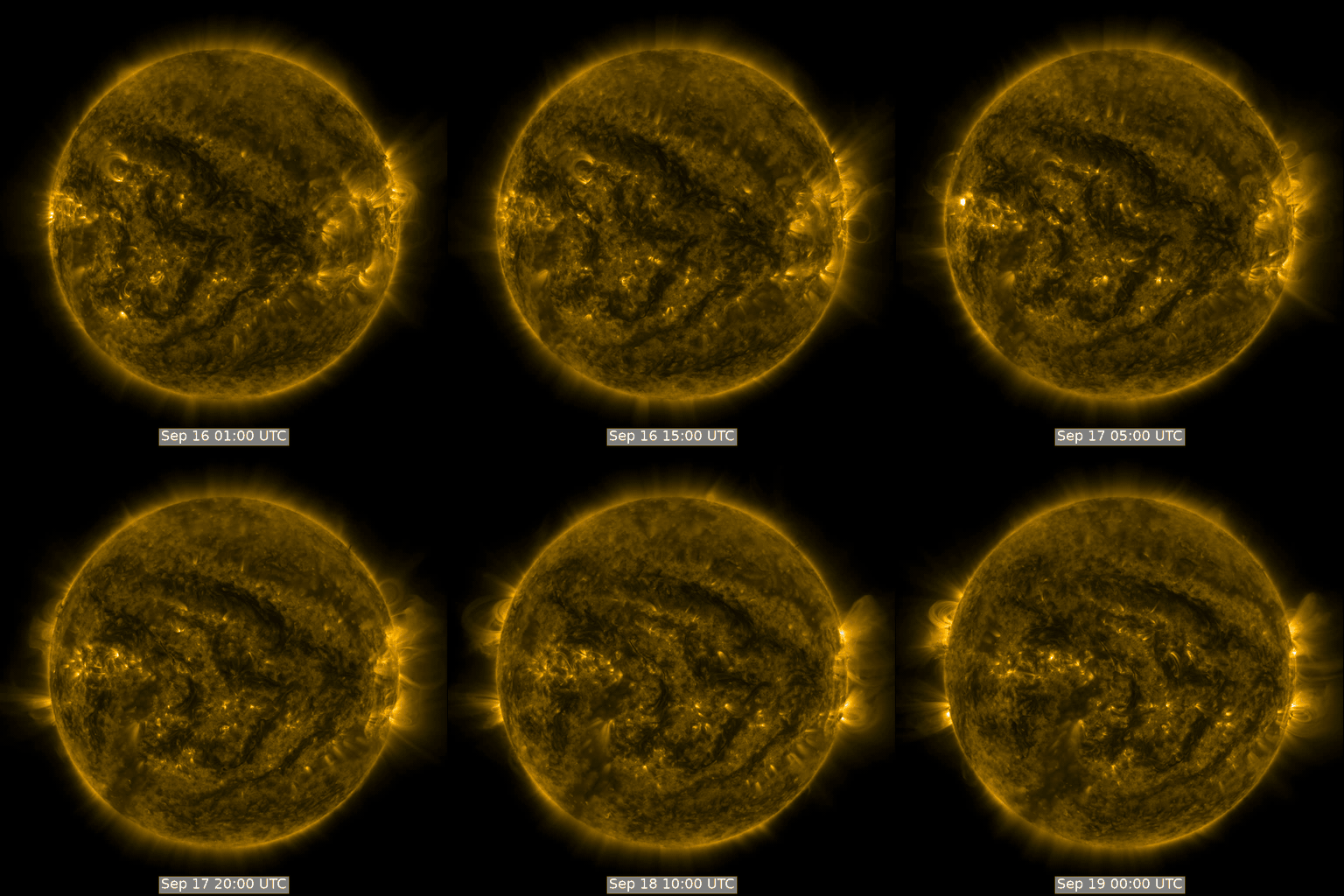
Images copyrighted by the SDO/NASA and Helioviewer project
📋 Propagation Summary
Today’s HF propagation is shaped by moderate solar activity and very quiet geomagnetic conditions. The solar flux is currently at 96 (recently trending lower from earlier months), and the sunspot number has dropped to 0, indicating limited support for higher bands. The K-index is at 0, meaning the geomagnetic field is very stable—great news for low-band and mid-band operators. Expect good conditions on 80m, 40m, and 20m, while higher bands (17m and above) will be more challenging. For best results, focus on the lower bands and take advantage of the quiet geomagnetic field for DX and reliable contacts.
💡 Operator Tips
- Prioritize 80m, 40m, and 20m for both local and DX work—these bands are performing well today.
- Use digital modes (FT8, PSK31, RTTY) to maximize your chances on higher bands (15m, 12m, 10m) where conditions are poor.
- With the K-index at 0, expect stable noise floors—great for weak signal work and contests.
- For DX, try grayline paths at sunrise/sunset on 40m and 20m.
- If you have a directional antenna, point it along north-south paths for best results, as east-west propagation may be less reliable on higher bands.
- Portable and QRP operators should take advantage of the low geomagnetic activity for clear signals, especially on 40m and 20m.
⏰ Best Operating Times
- 80m & 40m: Excellent all night and into early morning; good during the day for regional contacts.
- 20m: Good from late morning through early evening; best for daytime DX.
- 17m & 15m: Fair during midday; try digital modes for best results.
- 12m & 10m: Poor throughout the day and night; check for sporadic E openings, but don’t expect much.
🌍 DX Opportunities
- Grayline DX: Focus on 40m and 20m at local sunrise and sunset for enhanced long-path openings.
- Low Bands: Excellent for transcontinental and intercontinental DX due to low geomagnetic disturbance.
- High Bands: Limited DX on 17m/15m, but digital modes may yield surprises. 10m/12m likely closed except for rare short openings.
- Aurora: Minimal aurora activity (Aurora index = 1), so no significant VHF/UHF auroral propagation expected.
📻 Band-by-Band Analysis
| Band | Morning | Day | Evening | Night |
|---|---|---|---|---|
| 80m | 🟡 Good | 🟡 Good | 🟡 Good | 🟡 Good |
| 40m | 🟡 Good | 🟡 Good | 🟡 Good | 🟡 Good |
| 20m | 🟡 Good | 🟡 Good | 🟡 Good | 🟡 Good |
| 17m | 🟠 Fair | 🟠 Fair | 🟠 Fair | 🟠 Fair |
| 15m | 🟠 Fair | 🟠 Fair | 🟠 Fair | 🟠 Fair |
| 12m | 🔴 Poor | 🔴 Poor | 🔴 Poor | 🔴 Poor |
| 10m | 🔴 Poor | 🔴 Poor | 🔴 Poor | 🔴 Poor |
Analysis:
80m, 40m, and 20m are the standout performers today, offering consistent good conditions around the clock. 17m and 15m are only fair and will benefit from digital modes and midday operation. 12m and 10m are poor and largely closed—monitor for rare short openings, but focus efforts elsewhere for reliable contacts.
📊 Current Solar Activity
Solar Activity Metrics
K-index
Solar Flux (10.7cm)
Sunspot Number
- K-index: 0 (very quiet)—no geomagnetic storms, ideal for low-band propagation and weak signal work.
- Solar Flux: 96 (down from 116+ last month)—lower solar energy, so higher bands (15m and up) are less likely to open.
- Sunspot Number: 0—no active sunspots, further limiting high-band propagation.
- Space Weather Overview: No major flares or disturbances; X-ray flux is low (B2.9), and the sun is relatively quiet.
📈 Geomagnetic Conditions
- The K-index has been stable and very low over the past 24 hours, indicating a calm geomagnetic field.
- No recent spikes or disturbances—conditions are improving compared to any recent unsettled periods.
- Expect continued low noise and stable propagation, especially on the lower HF bands.
🌟 Space Weather Details
Space Weather Dashboard
X-ray Activity
Solar Wind Speed
Aurora Activity
- X-ray Activity: B2.9 (very low)—no risk of HF blackouts or sudden ionospheric disturbances.
- Solar Wind: 414.9 km/s—moderate speed, not enough to trigger geomagnetic storms.
- Particle Environment: Electron flux 1710, Proton flux 11—both at quiet levels, so no significant impact on propagation.
- Aurora Activity: 1 (very low)—no auroral propagation expected on VHF/UHF.
- Helium Line: 108.6—indicates low to moderate solar activity, consistent with the current quiet sun.
📡 Propagation Timeline & Technical Details
Propagation Quality Timeline (24 Hours)
- Recent months show a decline in solar flux (from 138 in June to 116 now) and sunspot numbers (from 94 to 76), suggesting we are in a quiet phase of the solar cycle.
- This trend means high bands (15m, 12m, 10m) will be less reliable, while low and mid bands (80m, 40m, 20m) remain your best bet for consistent contacts.
Solar Activity Trends (6 Months)
🔮 3-Day Forecast
3-Day K-index Forecast
- HF bands: Expect continued good conditions on 80m, 40m, and 20m. 17m/15m may see brief improvements, but 12m/10m will remain mostly poor.
- Geomagnetic field: Should stay quiet with low K-index values, supporting stable propagation.
- DX: Best opportunities remain on 40m and 20m, especially during grayline.
- No warnings or alerts at this time—enjoy the stable conditions and make the most of the low noise floor!